
Commercial construction projects represent some of the most intricate logistical challenges in modern business. Managing a multi-acre job site requires orchestrating hundreds of trade professionals, high-value material shipments, heavy machinery, specialized subcontractors, and strict regulatory frameworks. When site logistics are handled reactively, projects suffer from compounding delays, budget overruns, trade overlap friction, and heightened safety hazards.
Taking an operational view of job site management requires treating the construction area as an active ecosystem defined by inputs and outputs. Inputs encompass raw materials, specialized machinery, temporary utilities, and skilled labor. Outputs include structural progress, processed waste streams, environmental management, and completed milestones. Controlling these flows demands deliberate planning from early earthworks through final land handover. By establishing clear protocols across site clearance, power maintenance, heavy lifting, workforce welfare, and sustainable asset recovery, project leaders can maintain momentum, control costs, and safeguard their bottom line.
Executive Summary
This operational guide outlines the core strategies needed to master commercial job site logistics. Designed for project managers, general contractors, and site supervisors, this text explores how proactive vendor synchronization, preventive maintenance, and structured workflow sequencing prevent site congestion, reduce operational downtime, and ensure regulatory compliance on high-stakes developments.
Phase 1: Site Clearance, Debris Flow, and Early Works
The foundation of any successful commercial build lies in how efficiently early works and site clearance are managed. Before structural crews arrive or foundation pours begin, the physical space must be prepared, stabilized, and cleared of legacy materials. Inadequate planning during this phase creates a domino effect of delays that can impact every subsequent trade on the schedule.
Implementing Phased Material Removal to Prevent Site Congestion
A primary cause of early-stage project friction is site congestion. When multiple heavy haulers, excavators, and utility vehicles enter a site simultaneously without clear staging protocols, gridlock ensues. Managing this requires establishing segregated material streams and setting precise haul-off schedules.
- Establish designated loading zones away from primary access roads to ensure continuous traffic flow for incoming deliveries.
- Implement a mandatory gate-booking system where waste haulers must reserve specific arrival windows to prevent truck queuing on public roadways.
- Coordinate specialized demolition service teams to break down structures in structured phases, matching material output directly with haul-off capacity.
- Stage strategic construction dumpster rentals near active work zones, ensuring bins are designated for specific waste types to streamline processing and avoid mixed-debris surcharge fees. You could also consider a metal recycling company for support.
- Enforce weight limits and fill-line protocols on all site collection containers to prevent transport delays caused by overloaded haul vehicles.
By treating material removal as a continuous, synchronized process rather than an afterthought, site managers keep active work zones open, organized, and safe for early utility install teams.
Securing Environmental Approvals and Subsurface Safety
Groundbreakings frequently reveal unexpected subterranean challenges, ranging from high groundwater tables to soil contamination and hazardous gas migration. Addressing these issues early requires structured environmental testing and specialized remediation work before vertical construction begins.
Site managers must work alongside geotechnical engineers and environmental assessors to identify subsurface risks during the initial survey phase. In regions prone to natural gas seepage or dangerous soil emissions, early intervention is critical to protecting future building occupants and meeting regional building codes. Engaging a certified radon mitigation contractor during the sub-slab design phase allows teams to integrate passive or active venting systems directly into the foundation layout. This prevents expensive retrofits after the concrete footprint is set and ensures the site meets all structural safety and air quality compliance standards before framing begins.
Phase 2: Power Generation, Heavy Equipment, and Fleet Uptime
Once earthworks progress and structural phases begin, a site’s operational rhythm depends entirely on power supply and machinery reliability. Heavy equipment failure halts productivity immediately, causing idle labor costs to skyrocket. Maintaining uptime requires a blend of temporary utility planning and aggressive preventive maintenance.
Building Redundant On-Site Power Grids and Rapid-Fix Protocols
Commercial sites frequently operate ahead of permanent municipal grid tie-ins, relying heavily on temporary power distributions to run heavy machinery, site offices, hoisting equipment, and safety lighting. A single primary generator failure can shut down an entire shift.
To prevent power-related standstills:
- Conduct total load calculations including peak startup draws for heavy machinery, incorporating a minimum 20 percent power capacity buffer.
- Deploy modular generator configurations with automatic transfer switches, ensuring critical systems retain power if a single unit fails.
- Establish an on-site inventory of high-wear industrial generator parts, such as air filters, fuel filters, spark plugs, and voltage regulators, to enable immediate on-site repairs.
- Schedule weekly load testing and fluid sampling on all temporary power plants to catch mechanical degradation before complete component failure occurs.
- Partner with local equipment suppliers under strict Service Level Agreements (SLAs) guaranteeing emergency site visits within two hours of a critical power disruption.
Proactive power management eliminates costly idle time, ensuring that critical operations like concrete pours and continuous dewatering systems operate without interruption.
Standardizing High-Pressure Fluid Systems and Preventive Hydraulics
Heavy earth-moving machinery, excavators, telehandlers, and boom lifts rely heavily on high-pressure fluid systems to perform heavy work. Hydraulic failure is one of the most common causes of machinery downtime and poses significant site safety and environmental contamination hazards.
Managing a large equipment fleet requires standardizing mechanical check-ups. Site mechanics should execute daily visual inspections across all hydraulic systems, looking for subtle pressure drops, fitting wear, or outer sheath abrasions. Keeping an inventory of universal hydraulic hoses and crimping tools directly in site service trucks allows field mechanics to replace ruptured lines on the spot, turning what could be a half-day operational shutdown into a quick 30-minute fix. Furthermore, equipping all mobile service units with spill containment kits ensures that any fluid line failure is immediately mitigated, preventing hazardous oil from contaminating surrounding soil or entering storm drains.
Phase 3: Vertical Logistics, Rigging, and Heavy Lift Management
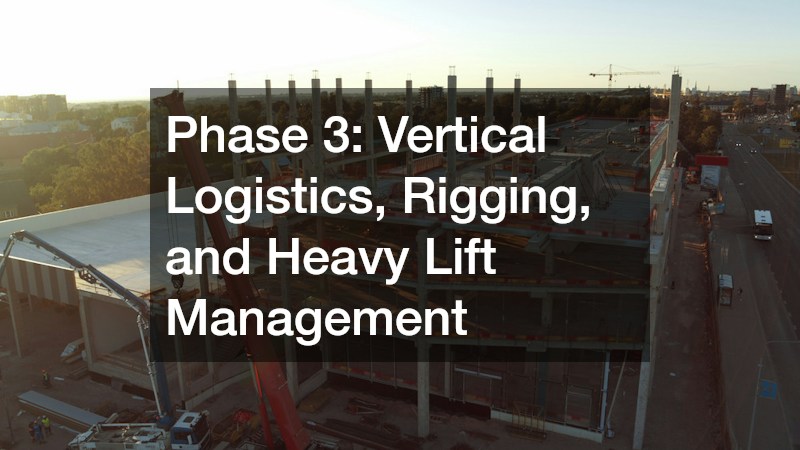
As projects shift from ground prep to vertical assembly, the primary operational challenge transitions to air-space management and heavy lifting. Managing vertical logistics requires precision coordination between ground transport teams, rigging crews, and crane operators to execute heavy lifts safely without creating ground-level bottlenecks.
Optimizing Hoisting Windows and Critical Lift Plans
High-capacity lifting operations dictate the rhythm of structural builds. Mismanaging lift schedules leads to delivery trucks backed up along perimeter fences, waiting to be unloaded, while ground crews sit idle waiting for structural steel or precast concrete panels.
- Establish strict Just-In-Time (JIT) delivery schedules for heavy structural components, ensuring transport trucks arrive only when the hoisting equipment is ready to lift directly from the trailer.
- Develop 3D lift plans for any load exceeding 75 percent of crane capacity or involving multi-crane tandem lifts, verifying boom angles, swing radii, and clearance margins.
- Contract experienced crane companies early in the planning phase to evaluate site access roads, ground bearing capacity, and outrigger pad placements before heavy machinery arrives on site.
- Implement centralized airspace management protocols when multiple hoisting assets operate on the same footprint to eliminate collision risks and coordinate priority lifts.
- Monitor real-time local wind speed and atmospheric conditions, enforcing mandatory operational cutoffs when wind gusts exceed manufacturer safety thresholds.
Advanced lift planning ensures that structural elements move smoothly from delivery beds to their final resting points without compromising ground safety or stalling surrounding trades.
Standardizing Rigging Audits and Daily Load Protocols
The integrity of any heavy lift depends entirely on the hardware connecting the load to the crane hook. Rigging failures can result in catastrophic material loss, project delays, and severe safety hazards.
Establishing rigorous rigging protocols involves mandatory daily inspections of all slings, shackles, spreader bars, and hardware. Equipment showing signs of stretching, fraying, or latch degradation must be removed from service and destroyed immediately to prevent accidental reuse. All rigging crews must adhere to standardized hand signals and dedicated radio frequencies, ensuring clear communication with crane operators throughout every phase of the lift.
Phase 4: Sanitation, Wastewater, and Human Logistics
While heavy machinery and structural materials dominate site planning discussions, human logistics—specifically workforce health, safety, and welfare—directly influence daily labor productivity. Managing a workforce that can range from a few dozen workers to several hundred during peak trades requires scalable utility and sanitation infrastructure.
Scaling Welfare Facilities and Servicing Ratios for Expanding Crews
Inadequate sanitation facilities lead to lost labor hours, reduced worker morale, and potential health code violations. As subcontractor headcounts increase during major trades, site managers must adjust welfare infrastructure accordingly.
Investing in accessible, well-maintained sanitation infrastructure directly protects productivity by minimizing lost movement time and keeping trade crews focused on high-value work.
Managing High-Volume Utilities and Subsurface Wastewater Flows
On expansive commercial developments, temporary site offices, field kitchens, and large-scale washing stations require robust wastewater management long before permanent municipal sewer connections are activated. Liquid waste accumulation can lead to environmental contamination, unpleasant odors, and site halts if not systematically controlled.
Site logistics plans must incorporate temporary wastewater storage systems equipped with automated level monitoring technology. High-capacity holding tanks tied to field offices must be serviced continuously to handle daily volume. Partnering with a reliable lift station service provider ensures that temporary subterranean pumping systems function correctly, moving wastewater efficiently across significant horizontal or vertical distances to central holding areas without backup risks or pump burnouts. Regular maintenance of these fluid systems keeps temporary facilities operating smoothly regardless of site size or worker density. If restrooms will be out of commission, consider a portable toilet rental service.
Phase 5: Sustainable Asset Recovery and Environmental Mitigation
Modern commercial site management demands high environmental performance. Municipal regulators, property developers, and corporate clients increasingly mandate strict waste diversion metrics, stormwater management standards, and post-construction land recovery plans. Far from being a cost burden, well-organized environmental programs can recover material value and reduce total project overhead.
Creating Profit Centers Out of Scrap and Sustainable Assets
Construction and demolition activities produce massive quantities of structural steel, copper piping, electrical conduit, rebar, and aluminum framing. Treating these materials as mixed waste represents a significant loss of potential revenue.
By turning scrap management into a structured revenue-generating program, project managers offset general waste disposal fees while achieving ambitious sustainability goals.
Executing Post-Construction Ecological Restoration and Soil Protection
The final phase of site operations involves mitigating the physical impact of heavy machinery, soil compaction, and grading activities on the surrounding environment. Fulfilling local environmental permits requires restoring disturbed soils and re-establishing native ecosystems before project sign-off.
Logistics plans must account for long-term erosion control and land rehabilitation from day one. Topsoil stripped during initial groundbreakings should be stockpiled, covered, and protected from runoff so it can be reused during final grading. Contracting specialists in habitat reclamation ensure that surrounding wetlands, natural drainage channels, and native flora are fully restored to their pre-construction states. Implementing hydroseeding, installing silt fencing, and planting native species prevents soil erosion, restores natural water filtration, and guarantees that the project passes all final environmental inspections.
Cross-Functional Operations: Vendor Oversight and Tech Integration
The key to unifying these distinct operational pillars lies in centralized vendor oversight and integrated field technology. A commercial job site cannot function efficiently when subcontractors and vendors operate in isolated silos.
Digital Tracking and Real-Time Asset Visibility
Deploying modern tracking software transforms reactive site management into a predictive operational discipline. Utilizing real-time location systems (RTLS), telematics, and digital material manifests gives logistics managers total visibility over site assets.
Leveraging data-driven asset tracking ensures that project managers can identify emerging logistical friction points early, adjusting site resources before minor delays become costly bottlenecks.
Master Scheduling and Vendor Synchronization Protocols
Technology alone cannot replace disciplined vendor management. Establishing clear operational standards and communication loops across every subcontractor on site ensures that independent teams work toward shared milestones.
When vendor communication is structured, predictable, and transparent, the entire job site operates with higher precision, lower friction, and significantly reduced operational risk.
Using This Guide for Large-Scale Commercial Site Operations
Managing commercial site logistics requires balancing heavy structural demands with detailed operational coordination. By shifting from a reactive troubleshooting model to a structured management plan, project leaders can turn potential site chaos into an efficient, predictable workflow.
Every phase of a build—from initial earth clearing and foundation prep to vertical assembly, workforce management, and site restoration—depends on the seamless synchronization of inputs and outputs. When site managers maintain continuous power grids, enforce lifting protocols, scale human welfare facilities, track valuable waste streams, and leverage real-time field technology, projects finish on schedule, within budget, and to the highest safety and environmental standards. Mastering these site dynamics is what separates average construction projects from truly exceptional operational successes.