The modern business landscape is undergoing a profound transformation. Standard, mass-market products and cookie-cutter service offerings no longer hold the monopoly on consumer attention. Today’s clients value craft, specialization, and technical mastery above generic solutions. Whether a client is looking to restore a family heirloom, revitalize a historic commercial space, or build a distinctive personal brand, they seek out specialists—entrepreneurs who have spent years honing a specific trade and building a business around niche expertise.
Launching a specialized business in the creative or trade sectors requires a delicate balance. On one hand, you must master a physical skill, craft, or technical discipline that demands rigorous training. On the other hand, you must navigate the realities of commercial operations, client acquisition, and operational overhead. The bridge between raw talent and a profitable, sustainable business is built on deliberate planning, smart partnership strategies, and an unyielding commitment to quality.
Laying the Foundation Through Specialized Education

Every high-value service business begins with foundational expertise. In niche trades, broad general knowledge is rarely enough to command premium rates. Clients hire specialists because they face specific challenges that standard generalists cannot solve, seeking out proven practitioners who possess an exhaustive understanding of their given medium, toolset, or field. Achieving this level of mastery demands far more than basic trial and error; it requires dedicated educational pathways, recognized technical certifications, and structured vocational training designed to accelerate skill development under expert supervision. By committing time and resources to structured learning environments, emerging business owners bridge the gap between amateur enthusiasm and commercial excellence, establishing a standard of practice that immediately distinguishes them from untrained competitors.
For example, entrepreneurs entering the modern wellness and personal care industry often begin by enrolling in an esthetician school to learn advanced skincare science, sanitary protocols, dermatological conditions, and client assessment methodologies. This formal training provides both the mandatory legal credentials required to operate a compliant facility and the deep technical understanding needed to deliver customized, safe treatments for diverse skin types. Similarly, individuals looking to enter industrial design, structural fabrication, or artistic metalwork often seek out specialized welding classes training to master precise joining techniques, spatial blueprints, complex metallurgy, and high-stakes equipment safety protocols. This intensive instruction ensures that physical fabrications are not only visually compelling but also structurally sound and compliant with local engineering standards.
Educational preparation extends far beyond traditional hands-on technical trades. In an increasingly globalized commercial environment where high-net-worth clients expect seamless international service, cultural and linguistic agility can serve as a massive market differentiator. An art consultant, gallery buyer, or high-end concierge who proactively attends a french class gains the immediate ability to communicate directly with European suppliers, heritage auction houses, overseas restoration artisans, and international collectors. This removes reliance on third-party translation services and opens exclusive commercial doors that remain firmly closed to monolingual competitors. Ultimately, the underlying principle remains constant across every commercial discipline: formal, rigorous skill acquisition is the non-negotiable bedrock upon which personal brand authority, market trust, and long-term business viability are constructed.
Identifying Niche Market Opportunities and High-Value Crafts

Once fundamental skills are secured, the next strategic step is identifying where those skills intersect with market demand. Specialized creative service businesses generally fall into distinct categories, each serving a unique customer base with tailored value propositions.
Preserving physical property and cultural artifacts represents a steady, high-margin market sector. Master craftspeople who specialize in art restorations work with galleries, private collectors, and estate managers to repair, stabilize, and maintain historical paintings, sculptures, and antiques. This work requires equal parts chemistry, art history, and painstaking dexterity.
A related yet distinct branch of preservation operates in the commercial and residential property management sector. Highly specialized teams focused on damage restoration respond to structural emergencies involving water, fire, or environmental degradation. While artistic restoration focuses on aesthetic and historic value, structural restoration focuses on safety, material recovery, and returning functional environments to their optimal state. Both fields command high fees because the cost of improper execution far outweighs the price of hiring a proven expert.
Creating visually appealing environments or presenting valuable items requires specialized presentation skills. Take, for instance, the field of custom framing. Far beyond simply putting a poster behind glass, professional framers understand archival mounting techniques, UV-protective glass properties, and timber selection to preserve delicate paper works, textiles, and memorabilia for decades.
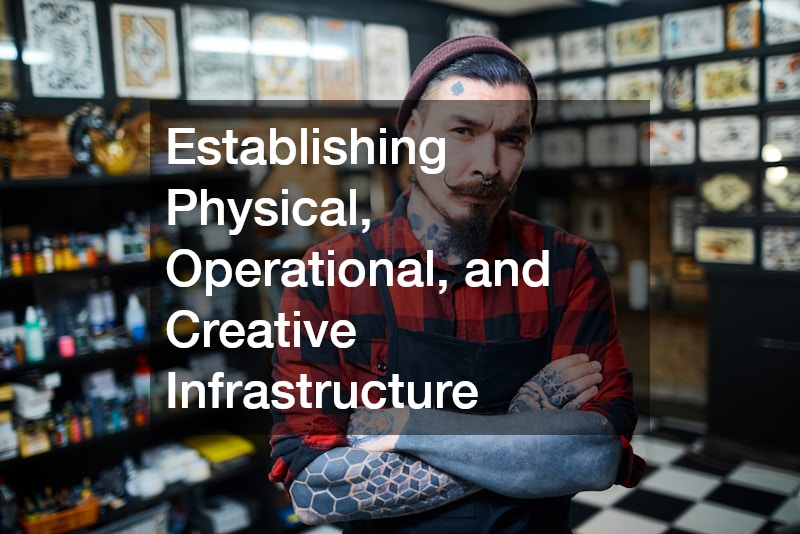
Personal identity and body modification represent another rapidly growing sector within specialized services. A well-managed local tattoo shop combines artistic vision with strict medical-grade hygiene standards, turning custom artwork into a lifelong personal statement. Like skin care specialists, tattoo artists and studio owners build client loyalty through personal rapport, consistent quality, and an uncompromising focus on client safety.
Establishing Physical, Operational, and Creative Infrastructure
Moving from an individual craftsperson to a full-fledged business operator requires building a functional workspace and establishing reliable operational systems capable of supporting sustained commercial growth. Transitioning away from a solo mindset means shifting focus from mere artistic execution to spatial efficiency, safety compliance, and corporate presentation. The physical environment of a specialized business serves two main purposes: it provides the technical tools, spatial layout, and environmental controls required to perform high-quality work, while simultaneously instilling unwavering confidence in prospective clients, investors, and regulatory inspectors who visit the facility.
When outfitting a commercial space, equipment selection, spatial architecture, and floorplan layout must directly mirror your daily operational workflow to eliminate unnecessary friction and physical bottlenecks. Workspaces involving volatile chemicals, heavy metal fabrication, or intricate body art require specialized industrial air filtration units, dedicated sanitation stations, specialized waste disposal protocols, and strict safety clearances to meet municipal codes and protect employee health. Simultaneously, creative and conservation spaces demand precise lighting environments, as color-accurate, full-spectrum illumination is non-negotiable for delicate painting restoration, custom framing mat selection, detailed aesthetic work, and precise material color matching. Beyond the active workshop floor, the waiting room, reception foyer, or private consultation studio sets the overall brand tone. A pristine, comfortably furnished, and thoughtfully designed entrance area immediately signals professional maturity, elevates the perceived value of the brand, and justifies premium pricing structures long before a single formal project quote is delivered to the client.
In addition to physical studio infrastructure, modern creative businesses rely heavily on advanced, integrated technological infrastructure to remain competitive. Outfitting modern conference rooms, digital media production suites, or physical retail galleries often requires partnering with professional audio video companies to install integrated sound systems, high-definition display arrays, dynamic architectural lighting controls, and calibrated acoustic dampening panels. These high-tech additions transform standard commercial property into immersive environments that significantly elevate the client experience during initial sales presentations, high-stakes design consultations, private art viewings, and interactive studio showcases, ensuring the business project an image of modern, cutting-edge capability.
Developing Strategic Partnerships and Supply Chains
No specialized business thrives in complete isolation. Building an ecosystem of reliable partners, material suppliers, and complementary service providers enables a lean business to handle complex, multi-faceted projects without inflating internal overhead. Different creative sectors depend on tailored networks; material preservation specialists coordinate with conservation labs, insurance adjusters, and niche suppliers, while visual framing studios align with art galleries, interior designers, and museum curators. Commercial production teams regularly rely on dedicated talent managers and media specialists, whereas personal service providers work alongside safety inspectors and specialized equipment distributors.
For example, a business launching a high-end commercial photo studio or lifestyle brand will frequently collaborate with local modeling agencies to source professional talent for marketing campaigns, editorial spreads, and promotional events. Rather than trying to manage every talent management detail in-house, partnering with established agencies allows the creative studio to focus strictly on art direction and production quality.
Similarly, cross-referrals between non-competing specialists create consistent lead pipelines. A custom framer will often refer clients with damaged canvases to an art conservator, while the conservator refers clients needing protective display cases back to the framer. Strategic alignment across complementary fields strengthens the entire local creative economy.
Building a Modern Marketing Engine
Having world-class technical skills means very little if potential clients do not know your business exists. In specialized trades, marketing must accomplish two distinct tasks: educate the target audience on why specialization matters, and demonstrate proof of skill through visual evidence.
Because creative and trade services are inherently visual and physical, prospective clients want to see tangible results before making a purchasing decision. In high-stakes specialized fields, verbal assurances alone rarely bridge the gap between initial client hesitation and total brand trust. Before-and-after transformations, time-lapse videos of complex multi-stage projects, and detailed walkthroughs of intricate technical execution serve as undeniably powerful social proof. When potential patrons observe the methodical care, surgical precision, and raw effort required to execute a high-end service, the value proposition shifts instantly from abstract pricing to clear, undeniable craft.
A specialized enterprise can build immense market credibility by publishing behind-the-scenes process videos detailing structural repairs or delicate material stabilization, stripping away the mystery of complex operations while establishing deep authority. Complementing visual media with long-form editorial content further solidifies this reputation. Writing comprehensive case studies that explain the precise historical, structural, or technical challenges behind a custom build demonstrates a level of problem-solving expertise that generic competitors simply cannot match. These deep dives allow prospects to visualize how the business handles unexpected project variables, mitigating perceived financial risk.
Furthermore, integrating authentic client testimonials that specifically highlight operational rigor—such as job-site safety, meticulous sanitation, on-time delivery, and long-term customer satisfaction—helps humanize the brand while addressing common consumer pain points. Content marketing for specialized trades should never focus solely on pushing a hard sales pitch; instead, it must operate as an educational platform. By lifting the curtain on industry techniques, explaining why high-grade materials are chosen over cheap alternatives, and showcasing finished projects across digital portfolios, a business turns passive onlookers into informed, enthusiastic brand advocates who appreciate the true worth of elite craftsmanship.
While the business owner remains the expert on craft execution, managing comprehensive digital marketing campaigns can quickly become a distraction from core operations. Partnering with a professional social media agency allows a specialized studio to maintain a consistent online presence, run targeted local advertising, and engage with online communities while keeping internal teams focused entirely on client work. Digital agencies help translate technical expertise into consumer-friendly messaging by optimizing local search listings, structuring pay-per-click ad strategies targeting high-intent search queries in your regional area, and ensuring that visual portfolios are formatted correctly across mobile and desktop platforms.
Managing Operations, Client Expectations, and Scaling

As a specialized service business gains traction, operational management shifts from finding work to delivering projects efficiently without compromising quality. Managing client expectations is often the single most critical factor in maintaining high satisfaction ratings and securing repeat business.
Specialized jobs frequently encounter unforeseen variables, such as a restoration project revealing hidden structural decay beneath a surface or a custom fabrication build requiring material substitutions due to supply chain delays. To prevent scope creep and disputes, every project should begin with a written agreement outlining detailed diagnostic assessments and current condition reports. Furthermore, these contracts must establish explicit milestones, estimated timelines, revision limits, and transparent pricing structures covering labor, specialized materials, and unexpected contingency work.
The hardest transition for a craft-based business owner is stepping back from direct execution to oversee a team of junior technicians or apprentices. To scale effectively without diluting brand reputation, owners must document detailed standard operating procedures for every workflow, from initial studio setup to final quality inspection. It is equally essential to invest in ongoing staff training by sending team members to advanced workshops and certification programs to keep internal skills current with industry advances. Finally, implementing comprehensive inspection protocols ensures that no finished project or completed service leaves the facility without passing a thorough quality audit conducted by a senior specialist.
Long-Term Sustainability and Growth
Building an enduring specialized service enterprise requires a commitment to lifelong learning, continuous infrastructure improvement, and community integration. Markets evolve, consumer preferences shift, and technical standards advance. The business owners who remain successful over decades are those who treat their trade as a dynamic practice rather than a static routine.
By combining rigorous technical preparation, clear operational frameworks, strategic industry partnerships, and focused modern marketing, creative entrepreneurs can transform specialized skills into thriving commercial enterprises. Whether preserving the past, transforming physical spaces, or crafting visual identities, specialized trade businesses remain the vital backbone of vibrant, culturally rich local economies.